Table of Contents
- Step 1: Installation
- Step 2: Create a Django Project
- Step 3: Set Up a Database
- Step 4: Create a Django App
- Step 5: Define Models
- Step 6: Migrate the Database
- Step 7: Create Views and Templates
- Step 8: URL Routing
- Step 9: Configure Settings
- Step 10: Run the Development Server
Introduction
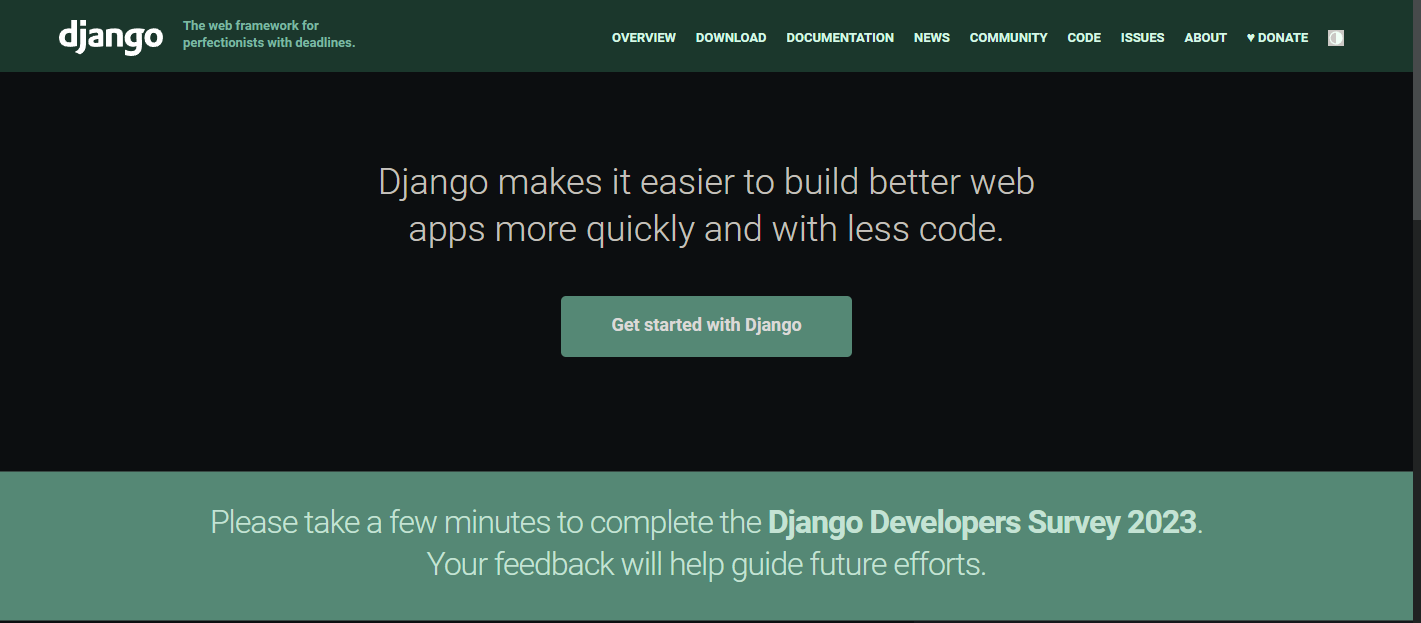
Django is a powerful web framework that simplifies the process of building web applications using Python. Whether you’re new to web development or an experienced developer looking to harness the capabilities of Django, this blog post will walk you through the fundamental steps of using Django for web development.
What is Django?
Django is an open-source web framework that follows the “Don’t Repeat Yourself” (DRY) and “batteries-included” philosophies. It is designed to help developers build web applications quickly, with clean, reusable code. Developed by Adrian Holovaty and Simon Willison, Django provides numerous tools and libraries that facilitate web development.
Getting Started
1. Installation
Before you can use Django, you need to install it. Open your terminal and use pip to install Django:
pip install Django
2. Create a Django Project
To create a new Django project, use the following command:
django-admin startproject projectname
This command creates the initial project structure and settings.
3. Set Up a Database
Django supports various database backends, but SQLite is the default for new projects. You can configure your database settings in the settings.py file within your project folder.
DATABASES = {

    'default': {

        'ENGINE': 'django.db.backends.sqlite3',

        'NAME': os.path.join(BASE_DIR, 'db.sqlite3'),

    }

}
4. Create a Django App
Django applications are modular components within your project. You can create an app using:
python manage.py startapp appname
5. Define Models
Models define the structure of your application’s data. Define them in your app’s models.py file.
from django.db import models

class Item(models.Model):

    name = models.CharField(max_length=100)

    description = models.TextField()

    price = models.DecimalField(max_digits=5, decimal_places=2)
6. Migrate the Database
Migrate your models to create the database schema:
python manage.py makemigrations

python manage.py migrate
7. Create Views and Templates
Views define how data is presented to users. You can define views in your app’s views.py file and create templates in the templates directory.
8. URL Routing
Create URL patterns in your app’s urls.py file to map URLs to views.
9. Configure Settings
Customize your project settings in the settings.py file to fit your needs, such as configuring static files and adding third-party apps.
10. Run the Development Server
Start the development server using:
python manage.py runserver
Best Practices
Follow the DRY Principle: Django encourages developers to follow the “Don’t Repeat Yourself” (DRY) principle by keeping code as reusable as possible.
Separation of Concerns: Keep your views, templates, and models separate, and maintain a clean structure within your application.
Use the Django ORM: Leverage the Django ORM for database operations, which is more secure and less error-prone than raw SQL queries.
Security: Be vigilant about security. Always validate and sanitize user input, use Django’s built-in security features, and follow best practices for handling sensitive data.
Testing: Write tests for your Django application to ensure its reliability and maintainability.
Documentation: Maintain thorough documentation for your code, making it easier for you and your team to understand and extend the application.
Conclusion
Django is a powerful and versatile web framework that simplifies web development, enabling you to create robust and feature-rich web applications with ease. This beginner’s guide covers the essential steps to get you started with Django, but there is much more to explore. As you delve deeper into Django, you’ll discover its wide range of features, including authentication, user management, and admin interfaces. Whether you’re building a simple blog or a complex web application, Django is a valuable tool that streamlines the development process and empowers you to create web applications efficiently. Happy coding!